Memphis, TN • Required After Windshield Replacement
ADAS Camera Calibration in Memphis TN
Modern vehicles require camera recalibration after windshield replacement. A misaligned ADAS camera can cause lane-assist, auto-braking, and adaptive cruise to work incorrectly. We perform static and dynamic calibration on-site before you drive.
Why Windshield Replacement Requires Calibration
The forward camera in your vehicle is mounted on the windshield glass itself, typically near the rear-view mirror bracket. When we remove the old windshield and install a new one, the camera must be unmounted and remounted.
Even a perfect remount introduces a tiny angular offset. The camera's field of view shifts by fractions of a degree. At highway speed, that translates into the camera seeing the lane line in a slightly different position than it expects, which can cause lane-keeping assist to steer incorrectly, or auto-braking to detect hazards too late.
Calibration resets the camera's reference so all distance, angle, and lane calculations are accurate again. It is not optional on vehicles that require it.
Most vehicles built after 2018 have at least one of these systems. We verify your vehicle's specific requirements when you book.
The Camera Mounted on Your Windshield
The forward-facing camera that drives your ADAS systems sits behind the rear-view mirror bracket, pressed against the inside of the windshield. It reads lane lines, measures following distance, and feeds data to auto-braking and adaptive cruise.
Replacing the windshield means unmounting and remounting that camera. Even a precise remount shifts the angle by fractions of a degree. At highway speed, that translates to lane-keeping errors and delayed collision detection. Calibration resets the reference baseline.
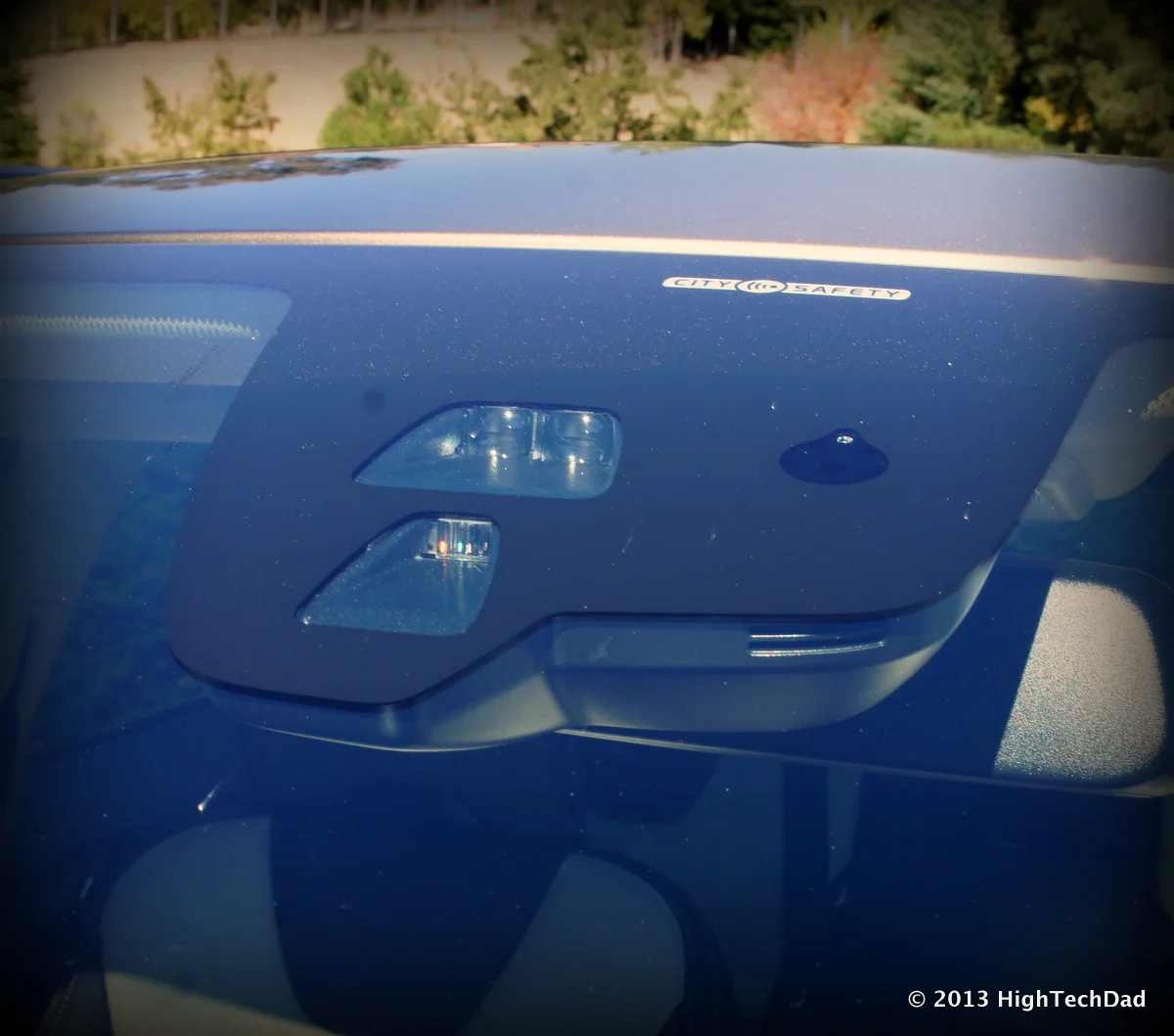
ADAS forward camera module (Volvo City Safety system). Photo: HighTechDad/Flickr, CC BY 2.0
Calibration Process, Step by Step
Done on-site, same appointment as your windshield replacement.
Vehicle Identification
We pull your vehicle's make, model, year, and VIN to determine the exact calibration procedure and equipment required by the manufacturer. Not all ADAS systems calibrate the same way.
Windshield Replacement
The calibration happens after the new windshield is fully installed and the adhesive has reached safe strength. The camera is remounted in the same position per manufacturer spec.
Static Calibration (If Required)
A precise target board is positioned in front of the vehicle at manufacturer-specified distance and angle. The diagnostic tool communicates with the camera module to reset its reference baseline.
Dynamic Calibration (If Required)
The vehicle is driven at a set speed on clear road while the camera module learns real-world lane line references. This is done on-site for most vehicles using local roads.
Verification
A final diagnostic scan confirms no fault codes and that all ADAS systems show calibrated status. You receive documentation of the completed calibration for your records.
Static vs. Dynamic Calibration
The type of calibration your vehicle needs depends on the manufacturer specification, not our preference.
Performed in a controlled indoor space. A precise target board is placed at an exact measured distance and angle in front of the vehicle. The diagnostic tool communicates with the camera module to recalibrate it to that target reference.
Advantages: not dependent on road conditions, repeatable, can be verified immediately.
Performed while driving at a set speed on a road with clear lane markings. The camera module learns its reference parameters from the real-world environment. Some manufacturers specify this in addition to or instead of static calibration.
We perform dynamic calibration drives on local roads, no need for you to drive separately.
ADAS Calibration: Frequently Asked Questions
What is ADAS and why does it need calibration?
How do I know if my car needs ADAS calibration?
What is the difference between static and dynamic calibration?
Can I skip calibration and drive after windshield replacement?
Does insurance cover ADAS calibration?
ADAS calibration available as a standalone service in Memphis and Shelby County.