Windshield Repair vs. Replacement: How to Tell Which You Need
Not every damaged windshield needs to be replaced. A proper chip repair is structurally sound, less expensive, and preserves the factory seal. But there are real limits, here's how the decision works, and what the thresholds actually are.
The Short Answer
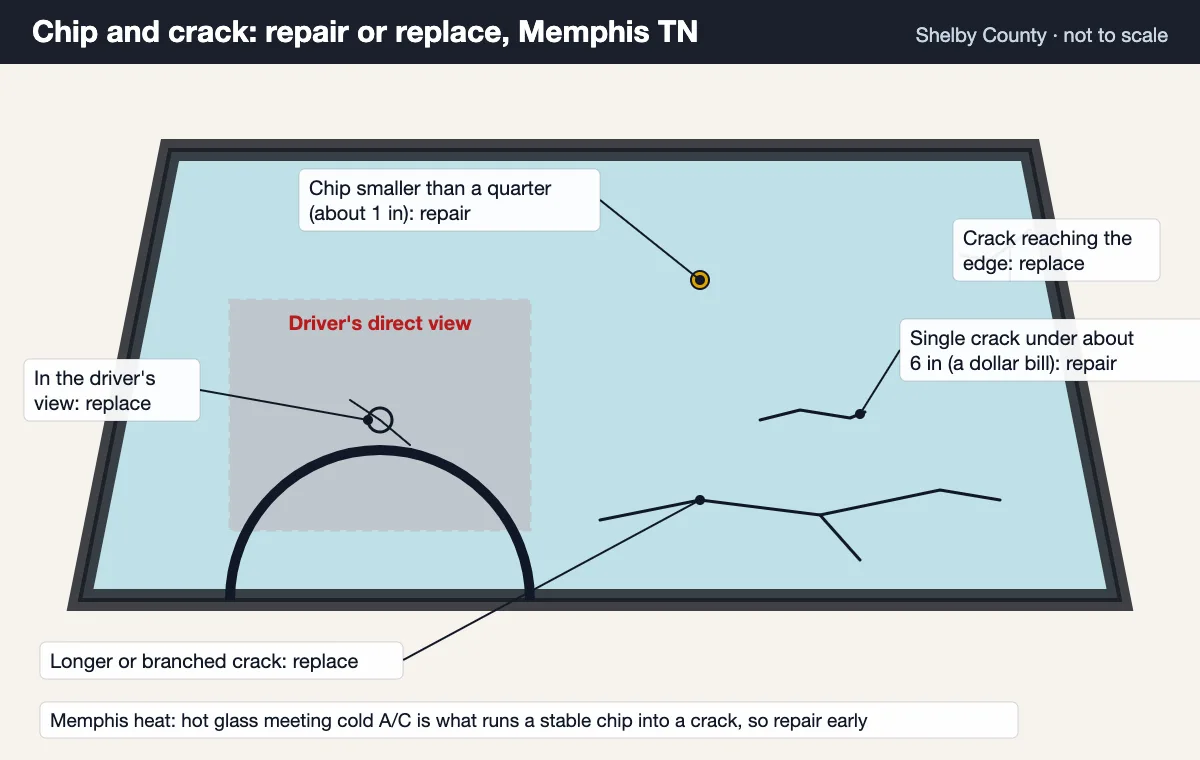
A chip or crack is repairable if it meets all four of these conditions:
- Smaller than a quarter in diameter (for chips) or shorter than 6 inches (for cracks)
- Not directly in the driver's primary sightline (roughly the area cleared by the wiper blade in front of the driver)
- Has not reached the edge of the windshield
- Has not branched into multiple cracks
If any one of those conditions fails, you're looking at a replacement. The repair process can't restore structural integrity once a crack has spread to the edge or branched, and it can't reliably restore optical clarity if the chip is in your direct line of sight. A crack in that spot is also the kind that can draw a traffic stop: see cracked windshield law in Tennessee.
Quick Reference: Repair or Replace?
Why the Edge Rule Matters
Windshield edges are the stress concentration zone. The glass is bonded to the frame here, and thermal expansion/contraction cycles create tension along the edge constantly. A crack that reaches the edge will almost always propagate further, even after a repair attempt. Repair resin can fill the crack, but it can't prevent a new crack from continuing along the edge bond line.
The rule of thumb is 1-2 inches from the edge as the minimum safe distance for a repairable crack. Some shops use different thresholds, what matters is that edge cracks have meaningfully worse repair durability.
Why the Sightline Rule Matters
Resin injection improves optical clarity significantly, the repair is usually nearly invisible. But "nearly invisible" isn't the same as perfect. Under certain lighting angles (low sun, headlights at night), a repaired chip can create minor visual distortion that's imperceptible in most of the windshield but distracting or dangerous in the driver's direct line of sight.
For this reason, most auto glass professionals and insurers apply the sightline rule strictly: if the damage is in the area you look through to see the road ahead, replacement is the right call even if the chip is small enough to technically repair.
What the Repair Actually Does
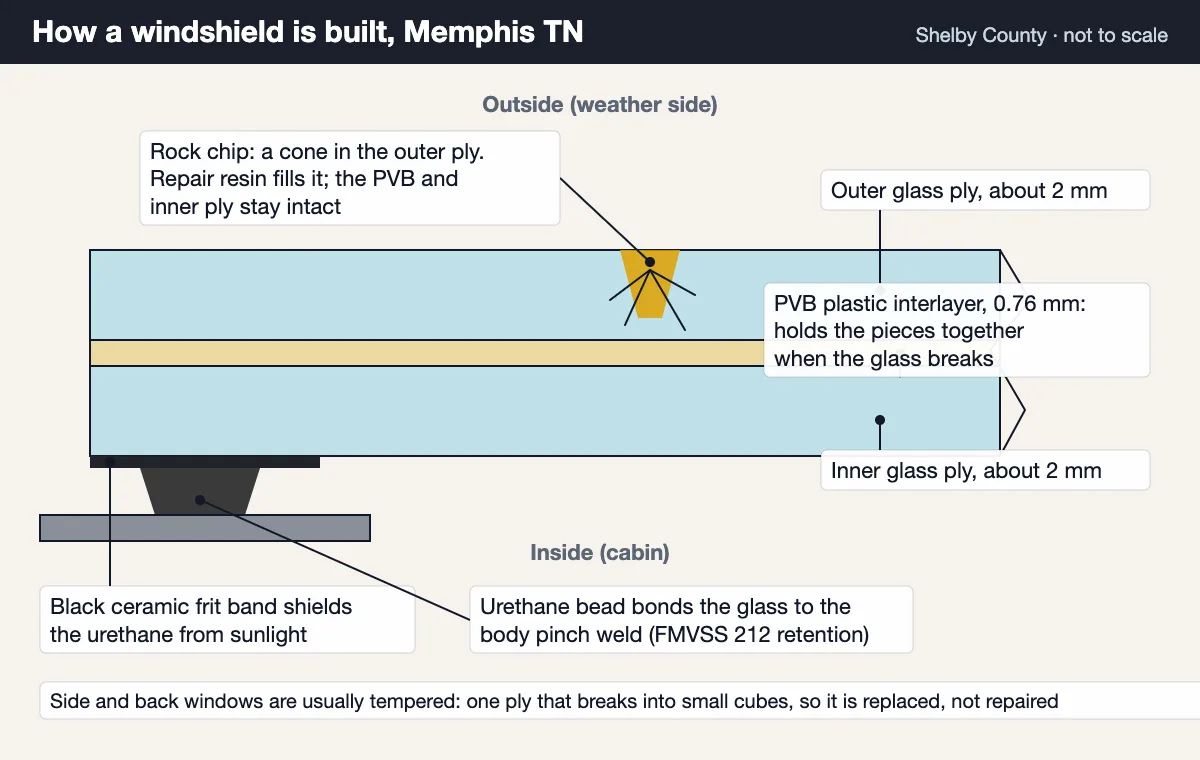
Windshield chip repair uses a resin injected under vacuum pressure into the chip cavity. The resin fills the void, restores optical clarity, and, critically, stops the crack from propagating. The cured resin has similar optical and mechanical properties to the original glass.
What it doesn't do: make the repair invisible. There is typically a faint trace of the original damage visible under close inspection, particularly in certain lighting. A properly done repair shouldn't distort vision, but it won't be perfectly undetectable either.
The repair also preserves the original factory seal between the glass and the frame, something a replacement by definition does not. This is a meaningful advantage for vehicles where the original factory adhesion is a quality signal.
Cost: Repair vs. Replacement in Memphis
Chip repair runs $85-$160 out of pocket in the Memphis market. Most comprehensive policies cover it at zero cost to you, because it is much cheaper for the insurer to pay for a repair than a future replacement claim.
Windshield replacement in Memphis typically runs $176 to $767 depending on the vehicle make and model, plus $100 to $300 for ADAS calibration if your vehicle requires it. Vehicles with embedded heating elements, HUD compatibility, or acoustic glass specifications tend to be at the higher end.
Replacement is a different story. Tennessee has no law waiving the glass deductible, so your comprehensive deductible applies unless you carry an optional full-glass endorsement. If your deductible is $500 and the job is $420, claiming gets you nothing. That asymmetry is the real argument for repairing early: repair is usually free, replacement usually is not. Confirm your actual coverage before starting any job. The insurance guide walks through how to read your declarations page.
Memphis-Specific: Why Chips Spread Fast Here
Memphis summers push interior car temperatures well above 150°F on hot days. Glass expands with heat and contracts at night, daily thermal cycling. A small chip is a stress concentration point, and this cycling amplifies that stress. Rock chips from I-40 and I-240 truck traffic that would stay stable in milder climates tend to crack faster here.
The practical implication: repair promptly. A chip that's repairable today can become an unrepairable crack after one hot week. Free repair quotes are available across Shelby County.
Frequently Asked Questions
Can a windshield chip be repaired or does it need replacing?
A chip or crack is repairable if it is smaller than a quarter (chips) or shorter than 6 inches (cracks), is not in the driver's primary sightline, has not reached the edge, and has not branched. If any one of those fails, it needs replacing.
Why can't a crack near the edge be repaired?
The edges are where the glass is bonded to the frame and where thermal stress concentrates, so a crack that reaches the edge almost always keeps spreading. The usual rule of thumb is to stay 1 to 2 inches from the edge.
Why do shops refuse to repair a chip in front of the driver?
A repaired chip is usually nearly invisible, but under low sun or oncoming headlights it can still distort the view slightly, which matters in the driver's direct line of sight.
Submit a free quote request with a description of the damage, including its size and where it sits on the glass.
Get a Free Quote →